Monday, February 24, 2014

JMW Turner


Turner...from Expressionism to Abstraction

Turner, the artist

Short Name:
Turner
Date of Birth:
23 Apr 1775
Date of Death:
19 Dec 1851
Focus:
Paintings
Mediums:
Oil, Watercolor, Prints
Subjects:
Landscapes, Scenery
Art Movement:
Romanticism
Hometown:
London, United Kingdom
Joseph Mallord William Turner

Introduction

Joseph Mallord William Turner is often described as the 19th century's greatest landscape painter. He was fascinated by the powers of nature and transferred this passion onto canvas.

In his later works he focused on the new abilities of the machines of the industrial revolution and he led a long and successful career.

As a leading Romantic painter focusing mainly on color and lighting, Turner's works went on to later influence the Impressionist movement.

Joseph Mallord William Turner Artistic Context

Joseph Mallord William Turner
Romanticism is sometimes viewed as a reaction to its more serious predecessor, the Neoclassical movement. As Neoclassical artists focused on properly accounting history through close attention to detail, Romantic artists flirted with themes of man's self glorification, man's part in nature, divinity found in nature, and emotion.

Though Neoclassicism is generally associated with the history genre, Turner is credited with having embarked on a subject matter so great that it actually rivaled the history genre. His subject matter accounts for recording history, but in a different style than ever seen before. He used color to intensify emotion in portraying the passing of events.

Joseph Mallord William Turner Biography

The Bay of Baiae with Apollo and the Sibyl
Joseph Mallord William Turner
J. M.W. Turner began his artistic career at a very young age and his success was almost immediate, selling his first painting at just 12 years old. Turner continued to accomplish significant achievements at a remarkably young age, some that people with much more experience would never have the privilege of enjoying.

Throughout his career Turner remained highly sought-after and he acquired a very large fortune from his commissions. He is remembered as an influential painter and is said to be the best landscapist of the 19th century. Turner was also a key inspiration for the Impressionist movement. He is most well-known for his original interpretations of bringing light and color to his paintings.


Joseph Mallord William Turner Biography 

Joseph Mallord William Turner Style and Technique

St. Mawes at the Pilchard Season
Joseph Mallord William Turner
Norham Castle Sunrise
Joseph Mallord William Turner
Turner displayed an evident evolution in his painting style throughout his long career. Though he stayed true to the genre of landscape, as his career progressed he began to pay less attention to the details of objects and landscape and more attention to the effects of light and color. He became increasingly fascinated with natural and atmospheric elements.

Style:
Early Years:
In Turner's early paintings he executed dramatic, Romantic subjects by emphasizing luminosity, and atmosphere. One can observe a more precise attention paid to architectural and natural details in his early years, as compared to his later years.

During this time, he played around with all the styles of landscape composition including historical, architectural, mountainous, pastoral and marine. His series of 71 etchings, inspired from his existing paintings and watercolors, show all of these styles (1807-1819).

Middle Years:
Turner's painting style shifted during the 1880s. His painting became more luminous and atmospheric. He began to focus more on color than the details of the actual topography. St. Mawes at the Pilchard Season (1812) is an example.

Frosty Morning (1813) is based solely on the effects of light. As time progressed he paid less attention to specific details and more to atmospheric quality created by the natural elements, such as the sun.

Advanced Years:
Still, less and less attention is given to detail, while his canvas now begin to assume a suggestion of movement. His Norham Castle, Sunrise and With A Boat Between Headlands are both examples of slightly brushed canvases, mere color notations.

Some of his more famous later paintings, he approaches the subject of modern technology. He pays a tribute to the passing age of sail ships that were soon to be replaced by steam-powered vessels. He moves away from marine subject matter, and focuses now on the railway in Rain, Steam, and Speed-the Great Western Railway (1844). This is a prime example of how Turner focused mainly on colors and the idea of fluidity through his whirling colors.

Method:
Turner's watercolor paintings provided a later influence on his technique with oil paint. He started to use oil paint in a translucent manner, similar to the effect of water color, which helped produce his original style.

Before painting a vast majority of his work, as many of his subjects (mainly water) changed so quickly, he had to do preliminary sketches. He later turned his sketches in to watercolor or oil paintings.

Joseph Mallord William Turner Who or What Influenced

John Robert Cozens
John Robert Cozens
London
Richard Wilson
Richard Wilson
Penegoes
Like most artists, Turner was heavily influenced by the masters that came before him. After closely studying the techniques of fellow Romantic landscape artists, both John Robert Cozens and Richard Wilson, Turner began to develop his own unique style. He spent time studying at the Louvre, viewing the work of other artists and honing in on his craft. His greatest influence however, came during his travels when he witnessed nature and all its grandeur live and in person.

Chronological Order of Influences:
As a young artist Turner (circa 1797) was employed to make reproductions of the unfinished work of the late landscapists, John Robert Cozens. Cozens, a fellow English romantic painter, had a lasting influence on Turner by his use of watercolors to create his luminous atmospheres. The similarities can be seen in the light treatment between the two artists.

Fellow landscapist, Richard Wilson, is credited as having revealed to Turner a more poetic and imaginative approach to landscape. Wilson was greatly commissioned by the aristocrats and even the royal family. His love for landscapes was said to be the cause of the loss of his fortune, as they were the least commissioned of his work.

Aside from style, his travels were the main inspiration for the content of his work. His travels throughout England, to Wales, Scotland, and through the European continent profoundly affected his work. His tour of Switzerland and France resulted in 400 drawings, which he later drew from to create beautiful painted landscapes. During his time in France he studied the Old Masters of art at the Louvre.

He took a strong liking to the marine activity, a subject often encountered in his work.

Joseph Mallord William Turner Works

Dort or Dordrecht the Dort Packet-boat From Rotterdam Becalmed
Fishermen at Sea
Frosty Morning
Norham Castle on the Tweed
Norham Castle on the Tweed Sunrise
Norham Castle Sunrise
Peace - Burial at Sea
Rain Steam and Speed - The Great Western Railway
Snow Storm - Steam-Boat off a Harbour's Mouth
Snow Storm Hannibal and his Army Crossing the Alps
St. Mawes at the Pilchard Season
Staffa Fingal's Cave
Sunrise with a Boat between Headlands
The Bay of Baiae with Apollo and the Sibyl
The Fighting Temeraire
The Shipwreck
The Shipwreck of the Minotaur

Joseph Mallord William Turner Followers

Turner Quotes
"I did not paint... to be understood. I wished to show what such a scene was like."
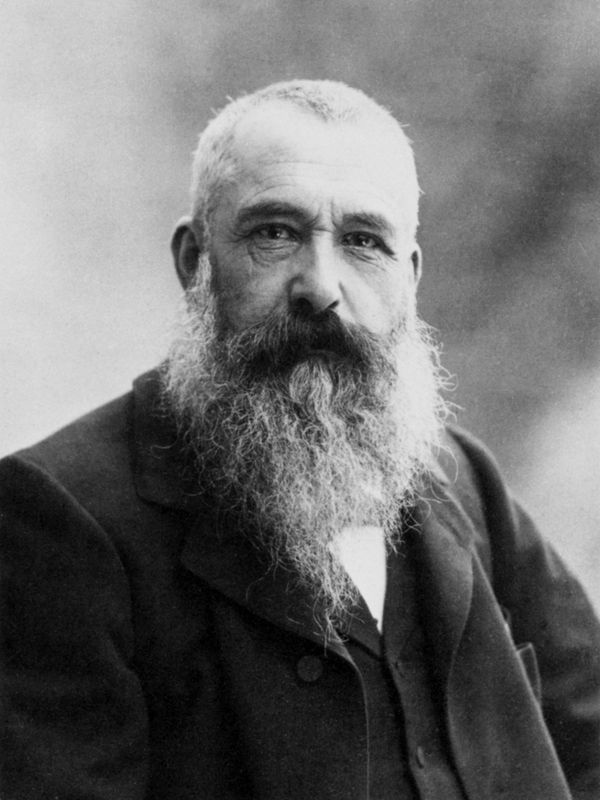
Claude Monet
Claude Monet
Paris
The majority of Turner's followers came after his death. He had the greatest recognized influence on the Impressionist, and Post-Impressionist movements. The ripple effect of his innovations can still be seen in the art of today's landscape painters.

Contemporary followers:
Though his talent was widely recognized during his day, not much is said of Turner's followers during his lifetime.

Posthumous:
A widely recognized group of Turner's followers were the Impressionists. Turner is said not only to have influenced Impressionist painters, but also Impressionist musicians.

Turner's abstract portrayal of light and the elemental forces of nature laid the ground work for impressionism and post impressionism. His observed nature and he challenged the conventional formulas of representation. His fascination with light is a concept said to have transcended from the canvas to even influence Impressionist musicians.

Impressionist art is characterized by the impression of objects or a scene through reflected light. It may be obscure, repetitive in effect and displays the appeal of color. The same goes for music, which also can be vague but still somehow demonstrate color.

Followers Today:
Turner continues to be talked about in blog pages and websites. Fans continue to praise his art and comment on how influential he has been to their own art.

Joseph Mallord William Turner Critical Reception

John Ruskin
John Ruskin
London
Throughout his career, Turner was a well-liked and highly sought-after artist. During his early days, the Royal Academy praised his work. Though patrons were willing to pay top dollar for his paintings, there were of course conservative critics who attacked Turner's compositions. A revival of interest in his work took place during the 20th century.

During Life:
As a young emerging artist of the early 19th century, conservative critics disapproved of Turner's "dynamic compositions" and shocking colors. This critical outlook did not influence the public however; Turner had enough commissions to last him a lifetime. His popularity increased further during the mid 19th century after John Ruskin, English art critic, pronounced Turner as superior to all previous landscape painters in his book Modern Painters (1843).

As a young emerging artist of the early 19th century, conservative critics disapproved of Turner's "dynamic compositions" and shocking colors. This critical outlook did not influence the public however; Turner had enough commissions to last him a lifetime. His popularity increased further during the mid 19th century after John Ruskin, English art critic, pronounced Turner as superior to all previous landscape painters in his book Modern Painters (1843).

After Death:
Turner's work was still admired after his death mostly so by fellow artists, the Impressionist. They admired his work for Turner depicted a moment in an ever-changing scene (turmoil of a storm, a sunset etc) masterfully, and with a beautiful attention paid towards color and light. These characteristics greatly influenced the Impressionist movement. The rebirth of interest in Turner's art occurred in the 20th century. He is recognized today as an innovative and technically accurate painter. Appreciation for his abstract qualities and use of color and light continues to grow even today.

Joseph Mallord William Turner Bibliography

Volumes have been written about Romanticism and Turner's contribution to this exciting movement. Below is a selection of some recommended works for further reading about this fascinating movement in art.

Books:
• Brennan, Matthew. Wordsworth, Turner, and Romantic Landscape. Columbia, SC. : Camden House, 1987
• Finley, Gerald. "Turner and the Steam Revolution. " Gazette Des Beaux-Arts 112 (1988): 19-30
• Gaunt, William. Turner. Oxford: Phaidon Press, 1971
• Klingender, F. D. Art and the Industrial Revolution. 1947. Ed. Arthur Elton. London: Evelyn, Adams & Mackay, 1968
• Lindsay, Jack. J. M. W. Turner: A Critical Biography. London: Cory, Adams and Mackay, 1966
• Reynolds, Graham. Turner. New York: Harry N. Abrams
• Rothenstein, John, and Martin Butlin. Turner. New York: George Braziller, 1964


Saturday, February 15, 2014

Vader Frans Claerhout

Father Frans Claerhout, acclaimed artist, priest and humanitarian was born on this day in Pittem, western Belgium. 

After completing his studies, he immigrated to South Africa in 1946 as a Catholic missionary. He was initially posted to the Orange Free State, where he worked among the black people living in and around Bloemfontein. He served primarily in Bloemfontein, Thabanchu and his beloved Tweespruit mission station.
Although Claerhout did not receive formal instruction in painting, his charming style appealed to art lovers and investors alike and he held his first solo exhibition in Johannesburg in 1961.
His artworks - characterised by their warm colours, thick impasto paint, exaggerated forms, humour and compassion - were exhibited widely in South Africa, as well as in Belgium, Canada, Germany, the United States and the United Kingdom. His subject matter consisted of people and animals that he encountered in his daily life. His donkey depictions are particularly well known. He primarily worked with oil paints on canvas or rough surfaces, but he also experimented widely with other media e.g. modeling in clay and wood-carving, wall-paintings, monotypes and linocuts, stained glass set in concrete windows and a prolific stream of drawings in charcoal, pen-and-ink or crayon. About four years before his death in 2006, it was alleged that forgeries were printed and sold as originals by an art dealer.

Father Frans Claerhout 1919 – 2006

Posted: May 19, 2013 in Visual Arts Theory Artists
Tags: , , , 
0
father Frans Claerhout
Image from Dirk and Domminique Schwager (1994)
Biography
The Flemish artist Father Frans Claerhout was born at Pittem in the western part of Belgium in 1919. Claerhout completed his training for the priesthood in 1945 and was sent to South Africa in 1946 as a Catholic missionary.  (His other choices had been Brazil or the Congo) Initially he worked in the Transvaal but in 1948 he was transferred to Bloemfontein, the capital of the Orange Free State. He worked as a missionary among the black villages around Bloemfontein, where his congregations consisted of simple and illiterate people living in impoverished surroundings.
Father Claerhout's Congregation
Father Claerhout’s Congregation
During his first year in Bloemfontein, Claerhout made no contact with other artists and his only artistic activities were little illustrative sketches for his mother. He started painting seriously in 1957, rough sketches, somber scenes in dull colours. In 1960 Claerhout moved to Thaba ‘Nchu where he started painting more. He saw Thaba ‘Nchu as an artisists paradise. He had more time to paint, as he no longer had to travel between districts. In November 1961 he held his first solo exhibition in Johannesburg.
In 1979 while in Belgium, he suffered a heart attack. After a bypass operation in Bloemfontein later that year, he experienced what he likes to call his second lease on life. His work became even more colourful – his colours radiating his warmth for and love for South Africa. (Ref)
“I see through African eyes with a touch of Belgium here and there. After all, you can’t put your heritage in a plastic bag and fling it out the window.” Claerhout
Claerhout lived to make other people happy; always smiling, even in the winter of his life.
“The nature and the soul – that is a gift … like writing or singing. And I am happy because it was a need to be myself…but then you are happy that somebody say: Ooh, I want it, I like it. I am very happy too that so many people have joy in life through my paintings. Life is beautiful, one must enjoy it fully.” (Ref)
Suncatcher – Image from DS Oosthuizen Gallery
Father Claerhout also authored several books, including four works of poetry. His artistic legacy includes 22 sculptures.  Claerhout continued to paint daily during the last few years of his life at a home for retired Catholic priests. He died in his sleep at the age of 87 in a Bloemfontein hospital after being admitted with pneumonia in 2006.
By using the money Claerhout made from his paintings, he funded the bulding of 20 churches, chapels and church halls, 8 vehicles for the transport of the sick, pensioners, and school children. built homes in the neighbouring town of Botshabelo, sponsored children’s education, and assisted priests financially in building their own churches.
Claerhout_Wedding
The Wedding
Aims and Characteristics
I like to paint through the eyes of a child. To a child a mother isn’t someone with 10 fingers, but a kiss, love or a bunch of flowers. – Frans Claerhout
Blommetjies vir my (Flowers for me)
Claerhout had no formal art training but came from an artistic family and he belonged to a local art society in his student years. He visited Belgium and toured its museums in 1957 and, on his return, began to sketch and paint with total dedication.
claerhout christ and
His style owes much to Flemish Expressionism. His earlier palette inclines to warm, almost somber, tones; although it has brightened over the years, under the influence of the open Freestate landscape, with flashes of clear blue and yellow illuminating the general ochre-umber glow. The Free State’s stark clarity and wide open skies and its indigenous population with their love of brightly coloured headdresses, blankets and dresses, nudged Claerhout into broadening his palette- adding more red, yellow, green and blue. Through constant experimentation he mastered the colour of his environment. (Ref)
Crucifixion with village mourners
Christus in Tweespruit – Crucifixion with village mourners
He often distorts and elongates his forms for emotional emphasis, but retains the overt visual character of all his subjects.  He doesn’t paint an actual person but he uses his subjects as a representation, as a basis on which he creates the whole idea. (Ref) His artworks are also characterised by their thick impasto paint, exaggerated forms, humour and compassion. He primarily worked with oil paints on canvas or rough surfaces, but he also experimented widely with other media e.g. modeling in clay and wood-carving, wall-paintings, monotypes and linocuts, stained glass set in concrete windows and a prolific stream of drawings in charcoal, pen-and-ink or crayon. (Ref)
In the 60s he began giving added attention to drawings and monotypes. These were usually studies of single figures, in which he freed himself to some extend from the repetitive mannerisms which were beginning to make his  oil compositions all appear familiar.Forceful blocks of colour and spontaneous almost hasty line contribute to the vitality of the sketches. Forceful blocks of colour and spontaneous, almost hasty, line contribute vitality to the little sketches.
To Claerhout the sketch was an easy medium to capture quick impressions and to memorize his tales. However naive Claerhout’s charcoal sketches appear, they flow with understanding of his subject matter. He developed his sketches by rubbing them with oil paint. His tonal values, although dark and somber at times, give a decorative edge to his work. Towards the end, Claerhout only worked with charcoal and acrylics.
Lady Figure with Duck
His subject matter are the people, animals and the village scenes around  the mission station at Thaba ‘Nchu. He found the eclecticism of their lives fascinating – the combination of traditional and western cultures. Thaba ‘Nchu was established as a homeland for Tswana and Sotho people under the 1913 Natives’ Land Act, and was characterized by widespread poverty and underdevelopment. The residents participated in subsistence- and small scale commercial farming ventures which mostly involved manual labour.
His donkey depictions are particularly well known. He also achieved particular renown through his child portraits with impersonal faces to portray the spirit of the child. He looks at the soul of the child, whose colour, race, background or civilization is immaterial. The shining faces always constitute the central theme, enlivened with a pretty dress full of flowers.
Crucifixion
Crucifixion
With Claerhout art and inner feelings are couple, so it is not surprising  that much of his subject matter is religious. Even though he paints the people with whom he works, going about their daily activities, one feels God radiating from them. (Ref) Thus to Claerhout his faith and his painting are indistinguishable: ”my belief inspires me.”  Father Frans Claerhout often depicts the everyday scenes he observes around him as Biblical Themes. When asked whether he would continue painting in heaven, he replied; ”Of course I shall.  I shall paint what I see.”  (Ref)
Claerhout sees Christ as a man covered in mysticism and he seeks to penetrate him, not as a supernatural being but as a living Christ risen from the dead. Frequently still bearing a crown of thorns, but forever pleading as man and God, moving among his earthly creatures like one of them … (Ref)
http://www.rosekorberart.com/special/item337.htm
Houses, Figures and Donkey
Influences
 His early works were greatly  influenced by the Flemish expressionists. Like the German expressionists, the Flemish Expressionists art were a protest art, but Claerhout felt, they had a mystique to their work, which made it more sympathetic than that of their contemporaries. He cites his strongest influence was that of the Flemish Expressionist Constant Permeke, whose paintings from the 1920’s and 30’s, like Claerhout’s, were concerned with peasants and the land they tend.
http://www.bozar.be/activity.php?id=12489&lng=en
Constant Permeke – Aardappelrooister 1929
Permeke’s work was not religious, but it was his ordinary subjects, everyday characters doing their daily chores; big hands, big breasts, that Claerhout admired. Claerhout got to know his work through books and he actually met the artist once. Permeke’s style is characterised by powerful contours, dark colours and simplified forms executed in a highly expressive manner. His figures are deliberately distorted and his colours warm. (Ref)
Constant Pemeke Flemish Expressionist
When Claerhout held his first solo exhibition in Johannesburg in 1961, the influence of Flemish art on his painting was still evident both in the colour and the atmosphere of these works, and it took a while before the clear blue skies of the Orange Free State and the greens, browns and yellows of its vegetation left their mark on his paintings.
Expressionism to Claerhout is painting only the necessary – I draw mouths, hands, faces, not feet and toes. He does not paint the actual person, but he uses them as a representation, as a basis on which he creates the whole idea.
The donkey camp
The Donkey Camp depicts the community headmen’s residences clustered around the chief’s residence, protectively built to include a ‘kraal’ for housing the animals. Drawing inspiration from the scenery around the Mission Church, Claerhout used expressive brushwork and muted colours to add to the rural character of ‘The Donkey Camp’. The heavy, abstracted figure of the farmer tending to his donkeys as the early morning mist starts clearing, is rendered in a rich earthy brown, emphasising his role as a man of the land. Donkeys, a treasured possession in the rural community, were commonly used as pack animals, for ploughing the fields, and for personal transport, and became one of the trademark subjects in Claerhout’s oeuvre, symbolising a simple, sober way of life. The two donkeys, encircled by the camp’s fence and patiently awaiting their next assignment, are symbolically central to the composition, their role essential to the day-to-day survival in this tough environment. (Ref)
Analysis of his Paintings by Previous Students
The Donkey Cart
The Donkey Cart
In the Donkey Cart Claerhout depicts a rural scene of a woman and child on a donkey cart. Claerhout also made many other Mother and Child portraits.These portraits, often virgin and child, echo the unhampered existence of African women, the natural bonding between mother and child without social restrictions. To him women are the core of families.
Karretjie People
Karretjie People
Although this image could be a depiction of the “karretjie people” found in South Africa, the red halo around the baby’s head immediately tells us that this image depicts a biblical theme, that of Mother Mary and baby Jesus, rather than just an ordinary rural scene. The predomination of blue also gives the painting an overall feeling of spirituality, especially with the contrast of red and yellow which makes the painting glow.
The loose brush strokes, bright arbitrary colours and the heavy black outlines used in this painting shows the influences of the Expressionists and Fauvists. The figures and the donkey’s forms are simplified and distorted to emphasize the emotional content of the painting. The background colour and the predominating colour is bright splashes of blue and turquoise, reminding us of the traditional Christian depictions of Mother Mary where her cloak always used to be blue. The red of the donkey is repeated in the woman, the baby, halo and splashes in the right hand foreground forming a binding element in the painting. As the baby’s blanket is the only white in the image one’s eye is drawn to the baby.
By depicting a biblical scene through ordinary people from the villages around him, Claerhout brings his spiritual vision down to earth. One feels that it reflects his spiritual mission of bringing the gospel to the poor through his own good works.
claerhout suncatcher painting
The Suncatcher
Like in most of his other art works Father Frans Claerhout depicts in The Sun-catcher his personal spiritual beliefs.Father Frans Claerhout writes in his poem, The Sun-catcher: “Die son sal skyn in jou hart as u die steun gee aan die struikelende mens…”  “The sun will shine in your heart if you give support to the stumbling person. The Sun-catcher, also resonates with his philosophy: “If you can catch the sun, you will never die.”
In the Sun Catcher Father Frans Claerhout depicts a seated woman with what looks like a sunflower. His brushwork and lines are loose and expressive, giving the impression that it was quickly sketched but observed with accuracy. The figure is simplified into its simplest elements, appearing almost childlike in its simplicity and in the economy of line used to depict the shapes. Rounded shapes dominate and is repeated in the sunflower, the woman’s belly and head, emphasizing both  the thematic and visual focal point. The viewer’s eye is lead back and forth between sun and the woman’s belly. He uses flashes of blue, green and yellow to illuminate image. In this image he also distorts and elongates his forms for emotional emphasis, like he does in his other works, but he still retains the overt visual character of all his subjects. The forceful blocks of colour and spontaneous, almost hasty, line contribute vitality of the sketch.
Christ and the other person
Claerhout explained this particular series as follows: “The series of Christ and the other person is a meditation of Christ and People.  What Christ is, cannot be found in research by the human mind. He was human – with and for man.  I feel I do not know much about him, but what I know and feel, that I like.”
To Claerhout faith is to be delightfully underage, expectantly.” Christ is to him the same in all his encounters with people, but each time different.  A Man for all seasons. He stirred the heart of all people and in this series are a few [of these people]. For the people that we know through the Gospel, who met Christ, He was man, prophet, something grand, an outcast, a sinner, love, forgiveness;  always an emotional sensation, visible and palpable. Almost all thinking people need other people – it is the beauty but also the tragedy of man. The medium here is paint. Color – line … the meditation is bound to the Evangelical text, it is the source … I hope that, with reference to the Gospel text, the 21 paintings will bring us love and growth. The last picture is the secret of faith: Christ alone. Who is the other person, me, you, us? “
The Original Father
The Original Father
In this series of paintings Claerhout’s figures are especially distorted and elongated for emotional effect so characteristic of the Expressionists. Colour is applied in loose expressive brushwork with thick sketchy outlines.
Crown of Thorns
Crown of Thorns
Through these artworks discussed we can get a clear image of Father Frans Claerhout’s spiritual beliefs. Most of his artworks depicts biblical themes but he uses the people and ordinary lives of those who surround him to depict his spiritual vision. Christ and the Other series perhaps most clearly expresses his belief that Christ must be experienced by each individual, in their own way.
References
Dirk and Dominique Schwager, Claerhout – Artist and Priest (1994)
http://www.chapter1.co.za/?page=shop/flypage&product_id=3051403